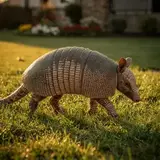
What matters at a Meridianville property
Photograph the pattern, note when new holes appear, and identify fence gaps or repeat travel lanes. That helps distinguish a one-time visit from established activity.
Signs worth mentioning on the call
Shallow cone-shaped holes in turf or beds
Nighttime activity along fence lines
Undermining near a slab, shed, or landscaping edge
Repeated soil disturbance after repairs
Get from wildlife signs to a clear removal plan.
Explain where the activity is happening and what you observed. That helps the wildlife professional plan the inspection, animal work, repairs, and cleanup.
A safer sequence before work begins
- 1
Confirm the damage pattern and active route
- 2
Discuss whether trapping is permitted and appropriate
- 3
Address access gaps and attractants
- 4
Avoid promising lawn recovery as part of animal control
Safety and agency flag
Do not handle an armadillo. Ask a permitted nuisance-wildlife operator about lawful methods and any reporting or relocation constraints.
Questions to ask before authorizing work
- Does the quote identify the likely entry point and the animal evidence?
- Are inspection, removal, exclusion repairs, cleanup, and follow-up priced separately?
- What happens if the animal cannot be confirmed during the first visit?
- Who handles permits, protected species, or public-health escalation if needed?
Primary and official sources
Verify the current guidance
Common questions
Before you make the call
Are all small lawn holes caused by armadillos?
No. Insects, moles, skunks, and other animals can create different disturbance patterns. Fresh photos and timing help with identification.
Is lawn repair part of wildlife control?
Usually not unless it is explicitly included. Separate animal-control scope from landscaping restoration.