
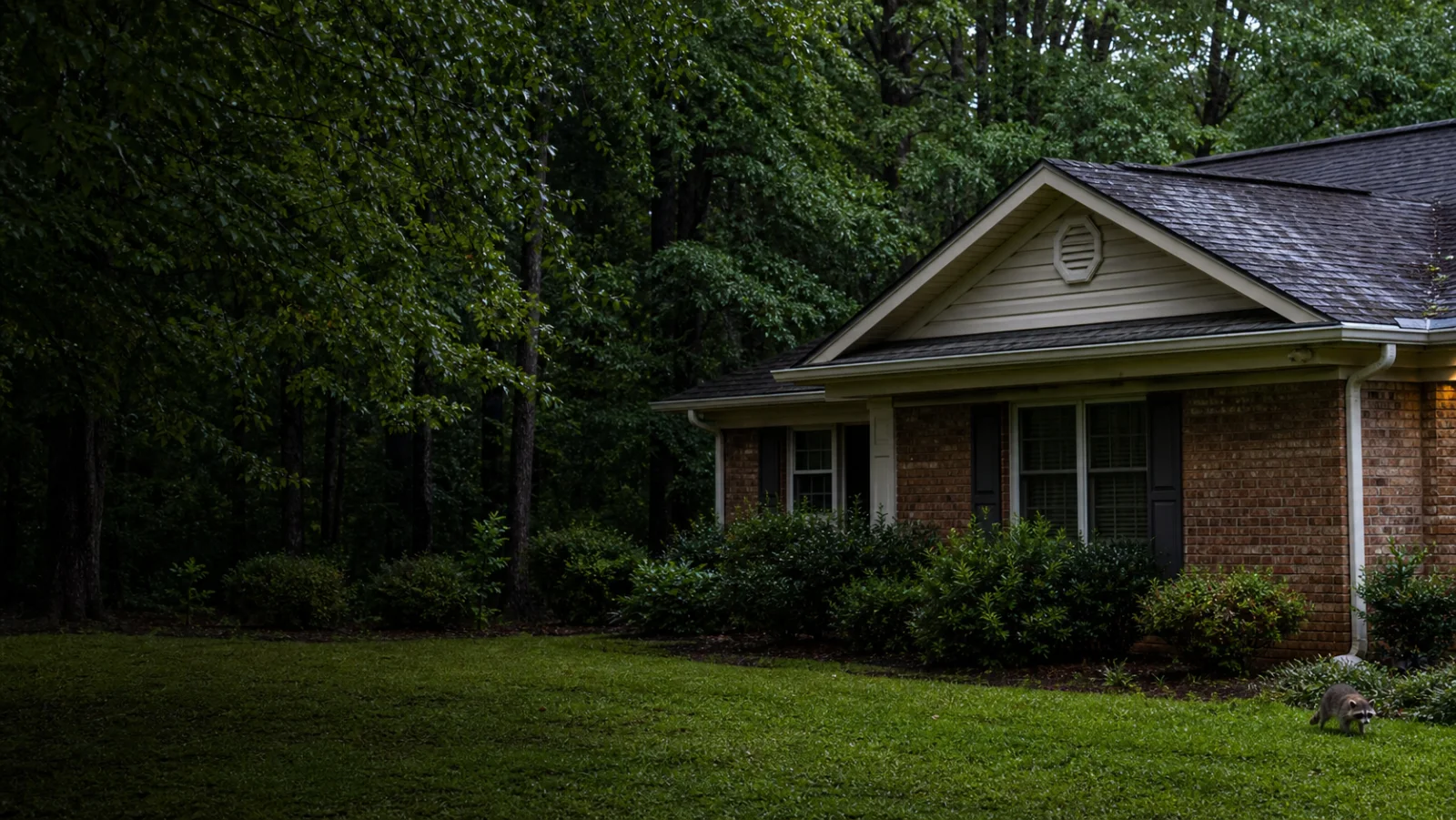
What matters at a Meridianville property
Write down a two-night sound log and mark the ceiling area below it. Providers can use that pattern to decide whether the first inspection should focus on roof returns, soffits, vents, gables, or a crawlspace route.
Signs worth mentioning on the call
Fast daytime movement can suggest squirrel or bird activity
Heavy nighttime movement can suggest a larger animal
Dusk flight at one opening can suggest bats
Odor without movement can signal a dead animal or old contamination
A safer sequence before work begins
- 1
Keep people and pets out of the affected space
- 2
Record timing and location
- 3
Inspect only from safe, accessible areas
- 4
Request identification before exclusion or repair
Safety and agency flag
Do not enter an unsafe attic, disturb droppings, or close an active opening before the animal and any young are accounted for.
Questions to ask before authorizing work
- Does the quote identify the likely entry point and the animal evidence?
- Are inspection, removal, exclusion repairs, cleanup, and follow-up priced separately?
- What happens if the animal cannot be confirmed during the first visit?
- Who handles permits, protected species, or public-health escalation if needed?
Primary and official sources
Verify the current guidance
Common questions
Before you make the call
Can sound identify the animal?
It narrows the possibilities, but sound should be combined with timing, entry evidence, droppings, tracks, or a direct observation.
Should I put poison in the attic?
No. Poison can create inaccessible carcasses and leaves the structural entry route unresolved.